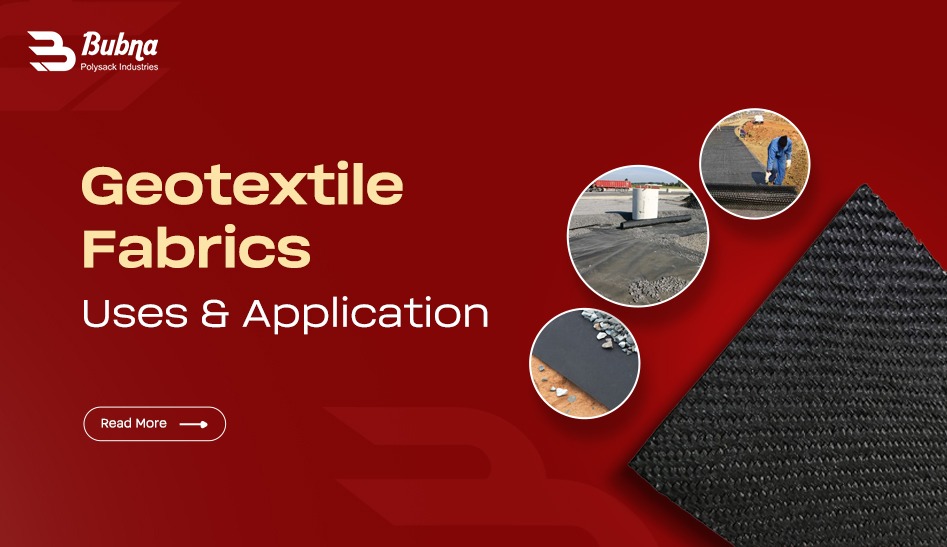
Construction projects today demand materials that not only improve structural performance but also extend the lifespan of roads, buildings, drainage systems, and landscaping projects. Engineers and contractors are constantly searching for solutions that enhance stability while reducing long-term maintenance costs. Among the materials that have transformed modern infrastructure, geo textile fabric has become one of the most valuable innovations.
From highways and railways to agriculture and erosion control, geo textile fabric serves as a dependable layer that strengthens soil, improves drainage, and protects structures from environmental damage. As a trusted manufacturer of industrial and agricultural solutions, Bubna Polysack Industries supplies high-quality geo textile fabric that meets the evolving requirements of infrastructure projects across multiple industries.
What Is Geo Textile Fabric?
Geo textile fabric is a specially engineered permeable textile designed to work alongside soil and other construction materials. It separates, filters, reinforces, protects, and drains depending on the needs of a particular project. Manufactured using durable synthetic fibers, it performs effectively even under harsh environmental conditions.
Unlike conventional materials that deteriorate over time, geo textile fabric is designed for long-term performance. It maintains its strength despite constant exposure to moisture, changing temperatures, and heavy loads, making it an ideal solution for infrastructure and civil engineering applications.
Its versatility allows engineers to incorporate it into projects ranging from road construction and embankments to drainage systems and landscaping.
Strengthening Weak Soil for Better Structural Stability
One of the biggest challenges in construction is building on unstable or soft soil. Without proper reinforcement, roads may crack, foundations can settle unevenly, and embankments may lose stability.
Geo textile fabric creates a reinforcing layer between soil and construction materials. It distributes loads more evenly, reducing pressure on weak soil while increasing the stability of the entire structure.
This reinforcement allows contractors to construct stronger roads, parking areas, retaining walls, and foundations without excessive excavation or costly soil replacement.
Improving Drainage Without Losing Soil
Proper drainage is essential for maintaining the strength of any infrastructure project. Water accumulation beneath roads or foundations often causes erosion, settlement, and structural damage over time.
One of the most important functions of geo textile fabric is filtration. Water passes through the material while fine soil particles remain in place. This prevents soil movement while allowing drainage systems to operate efficiently.
As a result, construction projects experience fewer drainage-related problems, lower maintenance costs, and improved long-term performance.
Reducing Soil Erosion in Challenging Environments
Heavy rainfall, flowing water, and strong winds can gradually remove valuable topsoil from construction sites and agricultural land. Soil erosion not only damages landscapes but also affects infrastructure stability.
Geo textile fabric helps stabilize soil by keeping it securely in place while allowing natural water movement. This makes it particularly useful for riverbanks, embankments, slopes, highways, canals, and landscaping projects where erosion control is essential.
The material supports vegetation growth while minimizing the environmental impact of soil displacement.
Increasing the Lifespan of Roads and Pavements
Road construction requires materials capable of supporting constant traffic while resisting settlement and surface damage.
When installed beneath road surfaces, geo textile fabric separates the aggregate layer from the underlying soil. This prevents mixing between layers, preserving the strength of the road foundation and reducing deformation.
The result is smoother roads with fewer cracks, lower maintenance costs, and longer service life.
Infrastructure developers increasingly rely on geo textile fabric because it improves both construction quality and long-term economic performance.
Supporting Sustainable Construction Practices
Modern construction increasingly focuses on sustainability alongside performance. Contractors seek materials that reduce waste while improving efficiency.
Geo textile fabric contributes to environmentally responsible construction by reducing the need for excessive natural aggregates and minimizing excavation requirements. Stronger foundations also reduce future repairs, conserving materials throughout the project's lifecycle.
Its durability further supports sustainable development because it continues performing effectively for many years without frequent replacement.
Applications Across Multiple Industries
One of the biggest advantages of geo textile fabric is its versatility. It performs effectively in a wide variety of industries beyond traditional construction.
Common applications include:
- Road construction, railway projects, retaining walls, drainage systems, erosion control, landfill engineering, canal lining, embankment stabilization, landscaping, agricultural development, and infrastructure protection.
This broad range of applications demonstrates why the material has become an essential component of modern engineering.
A Reliable Partner for Agricultural Projects
Agriculture also benefits significantly from geo textile fabric. Farmers frequently use it to improve drainage, reduce soil erosion, and strengthen pathways used by heavy agricultural equipment.
The fabric supports healthier growing environments by maintaining soil structure while allowing excess water to drain naturally. This helps protect crops and reduces land degradation during heavy rainfall.
For agricultural businesses seeking complete ground protection, Bubna Polysack Industries also offers products such as landscape fabric, weed barrier, weed barrier fabric, weed barrier cloth, weed fabric, and garden weed barrier that help maintain healthier fields and landscaped areas.
Supporting Construction Beyond Soil Reinforcement
Construction projects often require more than one protective material. Bubna Polysack Industries supplies a wide range of industrial products designed to complement geo textile fabric in demanding environments.
Products including hdpe sheet and hdpe plastic sheets provide dependable waterproofing and containment solutions for infrastructure projects.
Construction companies also rely on tarp, canvas tarps, custom tarps, heavy duty tarps, roof tarp, waterproof tarp, and truck tarps to protect equipment, building materials, and completed work from changing weather conditions.
Together, these products create comprehensive protection systems for construction sites.
Safe Transportation and Industrial Packaging Solutions
In addition to infrastructure materials, Bubna Polysack Industries manufactures reliable industrial packaging products that support transportation and logistics operations.
Businesses handling bulk materials depend on PP woven bags, polypropylene bags, pp bags, and fibc bags for safe storage and transportation.
Cargo safety is further improved through dunnage bags, cargo bags, and dunnage airbags, which reduce movement inside shipping containers during transit.
For agricultural produce, mesh bag, mesh produce bags, and mesh onion bags provide ventilation while protecting products throughout transportation.
Why Quality Matters When Choosing Geo Textile Fabric
Not every geo textile fabric offers the same level of performance. Material quality directly affects the stability and durability of the finished project.
High-quality fabric should provide excellent tensile strength, consistent permeability, UV resistance, and long-term durability under varying environmental conditions.
Choosing an experienced manufacturer helps ensure the material performs as intended while meeting engineering specifications and industry standards.
Bubna Polysack Industries combines advanced manufacturing capabilities with strict quality control to produce geo textile fabric suitable for demanding industrial and infrastructure applications.
Conclusion
Infrastructure projects require materials that deliver both immediate performance and lasting reliability. Geo textile fabric has become one of the most valuable engineering solutions because it strengthens soil, improves drainage, reduces erosion, and extends the lifespan of roads, foundations, and landscaping projects.
Its ability to perform multiple functions while supporting sustainable construction has made it an indispensable material across civil engineering, agriculture, environmental protection, and infrastructure development.
With its commitment to quality and innovation, Bubna Polysack Industries continues to supply dependable geo textile fabric and a wide range of industrial products that help businesses build stronger, safer, and more durable projects for the future.